



The era of the pristine, impenetrable corporate fortress is over, dismantled not by a singular crisis, but by a slow-moving cultural shift that has fundamentally altered the physics of reputation management. For decades, the mandate of the Chief Communications Officer was to polish the veneer, to sanitize the narrative until it gleamed with an inhuman perfection. However, as we wade deeper into the age of Generative AI, where flawless copy and hyper-realistic imagery can be synthesized in milliseconds, perfection has become commoditized. Worse, it has become suspicious. In this new paradigm, the polished press release is no longer a badge of professionalism; it is a red flag for a cynical public that equates sleekness with fabrication. The strategic pivot required now is not merely about being “honest”; it is about adopting a posture of Narrative Stewardship rather than narrative control. We must move away from the defensive curation of image and toward the active curation of truth messy, nonlinear, and undeniably human.
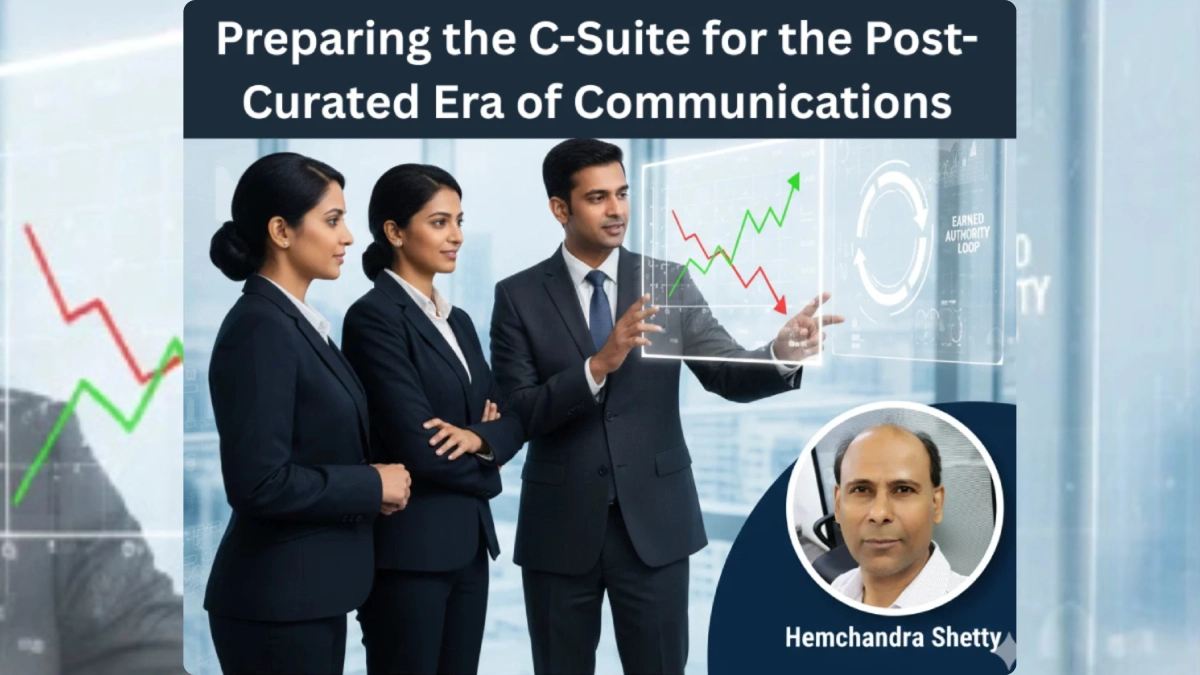
This transition requires a sophisticated understanding of what I call the Earned Authority Loop. Traditionally, brands sought authority first, hoping trust would follow. The loop has reversed. In a high-noise environment, vulnerability begets trust, trust fosters community advocacy, and only through that advocacy does a brand earn the authority to lead. We are witnessing a departure from “Brand Management,” which implies a static asset to be protected, to “Narrative Stewardship,” which acknowledges that a brand’s story is a living entity co-authored by its audience. This stewardship demands that we treat challenges not as PR fires to be extinguished behind closed doors, but as plot points in a larger story of resilience. When a brand admits to a stumble, they are effectively offering a “proof of humanity” in a digital ecosystem overrun by bots.
Consider the recent trajectory of a prominent mid-sized fintech player that faced a significant, though non-critical, service outage due to a legacy coding error. The old playbook would have dictated a vague apology citing “technical difficulties” while emphasizing their 99.9% uptime. Instead, the leadership leaned into the discomfort. They published a detailed, jargon-free post-mortem explaining exactly what broke, why their redundancy systems failed, and crucially how the engineering culture had inadvertently prioritized speed over stability. They did not fire a scapegoat; they exposed the systemic flaw. The result was counter-intuitive but predictable to the modern strategist: customer sentiment analysis showed a spike in positive engagement. By showing the cracks in their armor, they validated their authenticity. They short-circuited the media’s instinct to investigate because the brand had already performed the investigation on itself. This is the Earned Authority Loop in action: by relinquishing the facade of perfection, they gained the tangible asset of credibility.
This anecdotal evidence is supported by a hardening layer of market data. Recent industry sentiment analysis suggests that over 60% of consumers now believe that brands that do not admit to mistakes are hiding something far worse. Furthermore, skepticism toward AI-generated corporate communications is at an all-time high, with audiences actively scanning for the “human error” that signifies a real person is behind the message. The demand is for raw data over refined rhetoric. Strategic communications must therefore evolve to include the “work in progress” narrative. We are seeing this play out in the retail logistics sector, where a legacy brand recently chose to livestream their supply chain struggles during a peak holiday season. rather than hiding the backlog, they created a dashboard showing the bottlenecks and the human teams working to clear them. They transformed a logistical failure into a story of human effort and transparency. They didn’t lose customers; they built a community of empathetic onlookers who felt invested in the resolution.


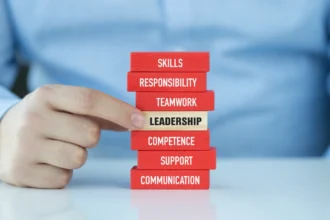
However, operationalizing this level of transparency requires a C-suite that is culturally prepared for the “Glass Box” existence. It is the role of the modern Communications Director to coach leadership that silence is no longer a neutral position it is a vacuum that will be filled by misinformation. Narrative Stewardship implies that if you do not tell the story of your challenges, someone else will, and they will not be charitable. This does not mean airing dirty laundry for the sake of shock value; it means sharing the strategic context of your struggles. It is about saying, “Here is where we fell short, and here is the precise mechanics of our correction.” This specific, actionable transparency inoculates the brand against future skepticism because it establishes a pattern of truth-telling that holds up even when the news is bad.
As we look toward the horizon of 2027, the dichotomy between the synthetic and the authentic will become the defining battleground of corporate affairs. We are moving toward a “Verifiable Reality” model of communications. In this near future, the most valuable corporate asset will not be a slick Super Bowl ad, but a blockchain-verified audit trail of decision-making and supply chain ethics. The next phase of communication evolution will see the integration of transparency tech directly into PR workflows, where claims are instantly substantiated by data sets accessible to the public. The brands that will thrive are those that are currently building the muscle memory for radical openness. They are the ones understanding that in a world of artificial intelligence, the only competitive advantage left is genuine, verifiable, and occasionally flawed human intelligence.
About Hemchandra Shetty
Hemchandra Shetty is a Strategic Communications Consultant and senior PR professional with nearly two decades of experience in reputation management and brand storytelling. An AI-savvy generalist, he leverages relevant AI tools to enhance efficiency, meet critical deadlines, and deliver precise, insight-driven communication outcomes. He has led complex, multi-market mandates for leading consulting firms, aligning communications with business objectives. Known for his strategic clarity and collaborative approach, Hemchandra integrates media relations, digital PR, and marketing seamlessly. His work consistently strengthens brand credibility, relevance, and stakeholder trust in a fast-evolving media landscape.