





The Dunning Kruger effect: why the least skilled often feel the most sure
“Ignorance more frequently begets confidence than does knowledge.” Charles Darwin, The Descent of Man (1871)
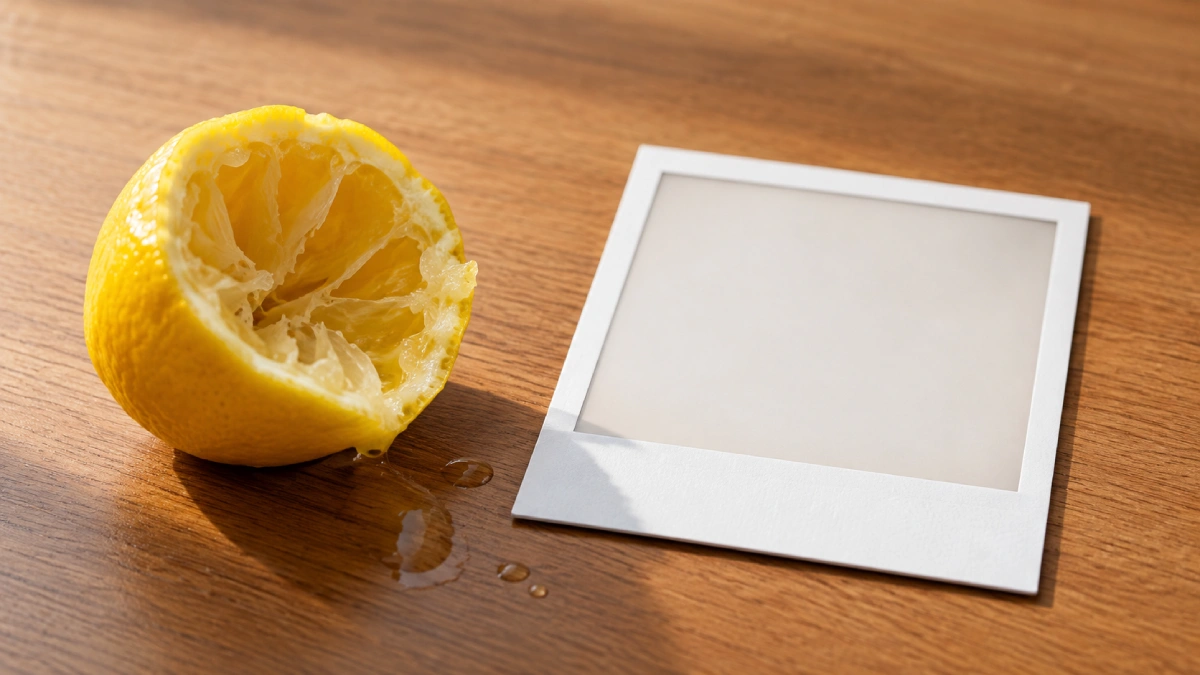
In 1995, a man in Pittsburgh smeared lemon juice on his face and robbed two banks without a mask. He had checked the plan first. He took a Polaroid of himself, found he was missing from the picture and took that as proof he was invisible to cameras.
The bank cameras disagreed. McArthur Wheeler was arrested within an hour of his face appearing on the 11 o’clock news. When police showed him the footage, he said, “But I wore the juice.”
Wheeler is an extreme case. The pattern behind him is common enough to have a name: the Dunning Kruger effect.
The Dunning–Kruger effect is the tendency of people with low skill in a specific area to overestimate how good they are. The same gaps that cause their mistakes also stop them from spotting those mistakes. Psychologists Justin Kruger and David Dunning described it in 1999 after testing Cornell students on humour, logic and grammar.
Where did the Dunning–Kruger effect come from
David Dunning, a social psychologist at Cornell University, came across the robbery in the offbeat news section of the 1996 World Almanac. He tracked it to a longer report in the Pittsburgh Post-Gazette. The filmmaker Errol Morris, writing about Dunning in The New York Times in 2010, described the thought that followed. If Wheeler was too incompetent to rob a bank, perhaps he was also too incompetent to know it.
Dunning tested the hunch with Justin Kruger, then also at Cornell. The results became Kruger and Dunning’s 1999 paper.
Their first study was about jokes. Sixty-five undergraduates rated 30 jokes, and their ratings were compared with those of professional comedians. The next studies used questions with clear right answers: 20 logic problems from a law-school admission test guide, then 20 grammar items. After each test, students estimated how they ranked against their classmates.



The weakest quarter scored around the 12th percentile. They placed themselves around the 62nd. In the logic test, they believed they had solved 14.2 of 20 problems. They had solved 9.6.
Two other findings get less attention. The strongest students underrated their rank, because they assumed everyone else had found the test as easy as they did. When both groups were later shown a set of their classmates’ grammar tests, the strong students raised their self-ratings. The weak students barely moved.
The fourth study holds the most useful result. Half the participants got a ten-minute lesson in the logic behind the test. Low scorers who took it could then grade their own answers almost as well as the top scorers. Their estimate of how many problems they had solved fell from 5.3 to 1.0. The real figure was 0.4.
Kruger and Dunning called this a dual burden. The skill you need to produce a correct answer is the same skill you need to recognise one. Someone who does not know a grammar rule cannot see that they broke it. The cure, awkwardly, is to get better.
The popular version has drifted from this. The paper dealt with one skill at a time, and a footnote states the authors made no claim about anyone being incompetent in general. The low scorers did not think they were experts. They thought they were a little above average.
The famous curve with “Mount Stupid” at its peak appears nowhere in the paper. Kruger and Dunning’s charts show self-estimates rising gently as real scores rise, just far too flat. The authors also noted that people do not overrate themselves where they have no clue at all. Few people believe they can translate Slovenian proverbs or rebuild an eight-cylinder engine.
Dunning–Kruger effect examples you have probably seen
In 2019, Philip Fernbach of the University of Colorado Boulder and four colleagues surveyed more than 2,000 adults in the US and Europe about genetically modified food. They also gave them a true-or-false test on basic science and genetics. The more strongly people opposed GM food, the lower they scored and the higher they rated their own understanding. The title of the paper, in Nature Human Behaviour, states the finding outright: extreme opponents know the least but think they know the most.
An Indian example comes from the market regulator. On 23 September 2024, SEBI reported that 1.13 crore individual traders in equity futures and options lost a combined ₹1.81 lakh crore between FY22 and FY24. Of those traders, 92.8% lost money. More than 75% of loss-makers kept trading after consecutive years of losses. Traders under 30 rose from 31% of the total in FY23 to 43% in FY24.
SEBI measured money, not self-belief, so these figures diagnose no one. What they show is feedback that should have worked and did not. A losing year is loud. Kruger and Dunning offered a reason it often fails to land: success needs several things to go right at once, while failure needs only one to go wrong. A loss can always be blamed on luck.
Carmen Sanchez and Dunning added a twist in 2018. Volunteers learned to diagnose invented “zombie diseases” from symptoms. They began cautious, then turned overconfident after a handful of cases, well before their accuracy justified it. Sanchez and Dunning called this the beginner’s bubble. A separate survey in the same paper found self-rated financial knowledge surging among young adults while actual knowledge rose slowly.
You meet this in quieter places. On Sanchez and Dunning’s evidence, the early weeks of learning to code or read a balance sheet are when your own work is likeliest to look better to you than it is. Kruger and Dunning pointed to one more reason the gap survives: people rarely tell each other they are bad at something. Colleagues say “looks fine”. Relatives say nothing. Silence reads as approval.
People often ask for the opposite of the Dunning–Kruger effect, and the usual answer is impostor syndrome. The 1999 data point elsewhere. The strong students were not anxious about their ability. They misjudged other people, assuming the test was easy for everyone.
Is the Dunning–Kruger effect real
This is where the story gets contested.
In 2002, Joachim Krueger and Ross Mueller argued in the Journal of Personality and Social Psychology that much of the pattern comes from two statistical facts. Most people rate themselves above average. And anyone who scores at the very bottom has more room to overestimate than to underestimate.
Edward Nuhfer and colleagues went further in 2016 and 2017, in the journal Numeracy, showing that random numbers can reproduce the classic chart. In 2020, Gilles Gignac and Marcin Zajenkowski titled their paper in Intelligence “The Dunning–Kruger effect is (mostly) a statistical artefact”. Using a different method on self-estimated intelligence, they found little sign of it.
The debate has not closed. Avram Hiller (2023) argued that Gignac and Zajenkowski’s result came from how they recoded their data. Dunkel, Nedelec and van der Linden (2023) repeated the analysis and found an effect that was real but weak. Kruger and Dunning had raised the statistical objection themselves in 1999, and their training study is hard to explain by numbers alone. The only thing that changed was the participants’ skill.
The fair reading is a modest claim. Everyone is poor at rating themselves, and low scorers overrate themselves by more. The dramatic version, in which the least able are the most confident of all, goes beyond the data. There is an irony here. People who fling “Dunning Kruger” as an insult online are often sure of a finding they have not read.
How to judge your own skill more accurately
The 1999 paper points to the most reliable fix. You cannot grade yourself in an area where you are weak, so borrow someone who can. Ask a person who is good at the task to mark your work, and ask for a score rather than a reaction.
Prefer feedback from outside your own head: a test with an answer key, or a result you can count. Your sense that something went well is the instrument this effect breaks.
Treat fast confidence in anything new as a warning light. If you feel sure of yourself a month into a new skill, that is the bubble Sanchez and Dunning measured. It deflates as you learn, and the dip in confidence is a sign of progress.
Before defending a strong opinion, explain step by step how the thing works. Gaps you could not see appear the moment you have to fill them.
If you are good at something, look at how others perform before you rate yourself. You may be assuming your ease is everyone’s.
The tool you use to judge your work is built from the same skill as the work. Where one is weak, so is the other.
Daily Reflection
Pick one thing you felt sure about today, at work or at home. Ask who could mark your answer, and what score they would give it.